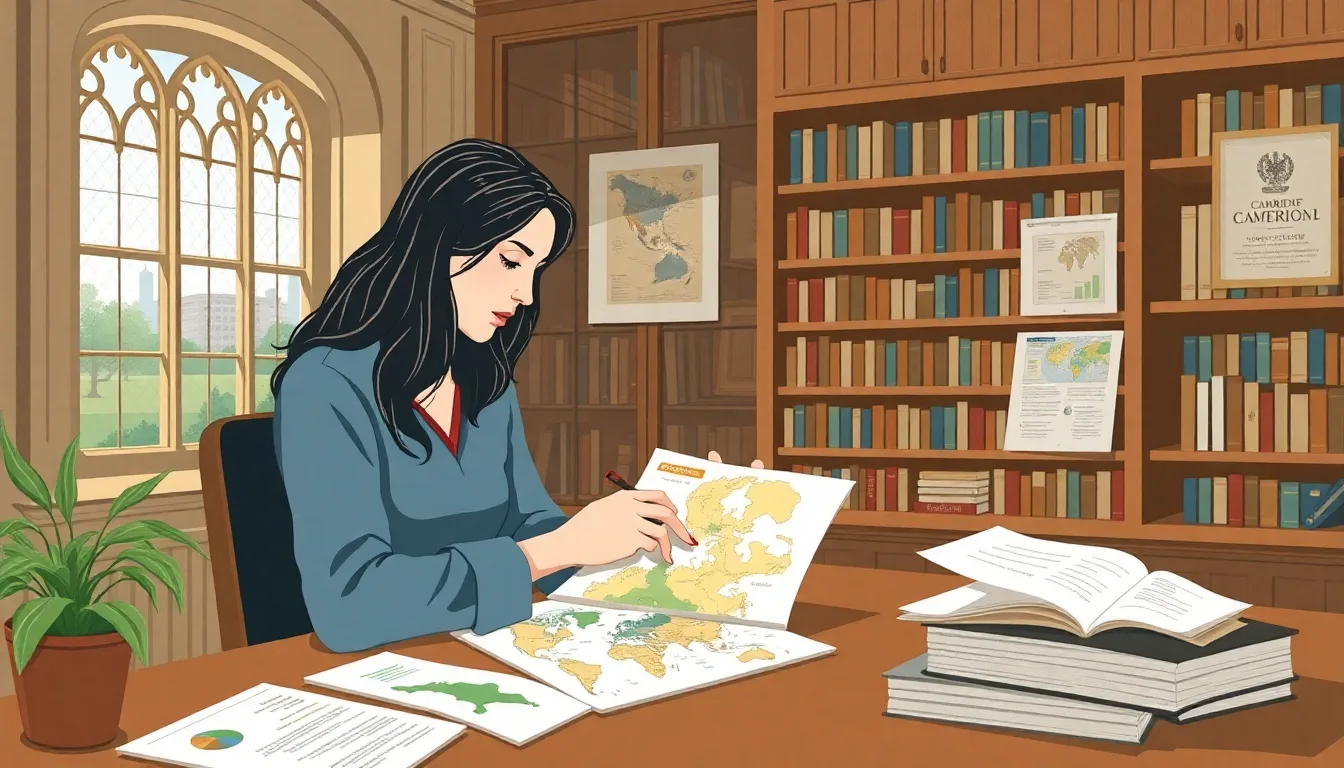
Understanding the Cambridge Geography Interview
The Cambridge Geography interview, particularly for the MPhil in Conservation Leadership, is a distinctive academic and professional assessment. Unlike undergraduate interviews, which may focus more on academic potential and foundational knowledge, the postgraduate interview for this department is a nuanced evaluation of your ability to bridge theory and practice, your grasp of contemporary conservation issues, and your readiness to contribute to an interdisciplinary academic community. The selectors are not looking for encyclopedic recall or a flawless professional narrative; instead, they are searching for evidence of reflective thinking, critical engagement with policy and leadership, and the capacity to grow within a demanding, collaborative environment.
The Purpose and Structure of the Interview
The interview is not a formality. For the MPhil Conservation Leadership, it is a core part of the admissions decision. The panel-usually two or three faculty members, sometimes including practitioners-will have read your application materials in detail. They will use the interview to probe beneath the surface of your written record, testing your ability to think on your feet, reflect on your experiences, and engage with the complexities of conservation in the real world.
Typically, the interview is conducted online and lasts 25-35 minutes. The format is conversational but probing. Expect questions that move fluidly between your academic background, professional or volunteer experience, and your understanding of current debates in conservation policy and leadership. There may be scenario-based questions, invitations to reflect on past failures, and opportunities to ask the panel your own questions about the programme.
What Cambridge Selectors Actually Evaluate
Selectors for the MPhil Conservation Leadership are looking for more than academic achievement. Based on years of reviewing applications and interview outcomes, the following areas are consistently at the heart of their evaluation:
- Academic-Practical Synthesis: Can you connect theoretical frameworks to the practical realities of conservation work? Are you able to move beyond abstract discussion and engage with the complexities of implementation, stakeholder conflict, and policy trade-offs?
- Policy Literacy: Do you understand the policy landscape? Can you discuss current frameworks (e.g., CBD, REDD+, EU Biodiversity Strategy), controversies, and the interplay between science and policy? Are you aware of the limitations and opportunities of policy mechanisms?
- Leadership Reflection: Can you reflect honestly on your leadership experience? This is not about listing positions, but about articulating what you learned from both successes and failures, and how your approach to leadership has evolved.
- Intellectual Curiosity: Do you ask insightful questions? Are you willing to challenge your own assumptions and engage with unfamiliar perspectives? Can you think critically about the field’s current debates?
- Communication: Are you able to explain complex issues clearly, adapting your language to different audiences (academic, policy, community)? Can you listen as well as speak?
Selectors are not seeking the finished article, but rather applicants who show the potential to develop rapidly in a Cambridge environment, both as scholars and as practitioners.
Case Study 1: Academic-Practical Synthesis in Action
Consider the case of a candidate, "Anna," who applied to the MPhil Conservation Leadership after several years working with a regional conservation NGO in Southeast Asia. Her academic background was strong, but what set her apart in the interview was her ability to bridge theory and practice. When asked about the challenges of implementing community-based conservation, Anna did not simply cite literature. Instead, she described a specific project where theoretical models of participatory management clashed with local political realities. She outlined how she adapted her approach, drawing on both Ostrom’s principles and local knowledge, and reflected on what she would do differently in the future.
This level of synthesis-connecting academic frameworks to on-the-ground challenges, and showing a willingness to learn from failure-demonstrated the qualities Cambridge selectors value most.
Case Study 2: Policy Literacy and Critical Engagement
"Ravi," another applicant, came from a policy background, having worked as a junior analyst in a national environment ministry. During the interview, he was asked about the effectiveness of international conservation agreements. Rather than reciting the provisions of the Convention on Biological Diversity, Ravi discussed the gap between ratification and implementation, using examples from his own country’s struggles with enforcement. He acknowledged the political and economic constraints, and proposed realistic, context-sensitive strategies for improving compliance. He also raised thoughtful questions about the role of non-state actors in driving policy change.
This approach-grounded, critical, and aware of complexity-marked Ravi as a candidate who could contribute meaningfully to the policy dimension of the MPhil.
Case Study 3: Leadership Reflection and Growth
Leadership is a central theme in the MPhil Conservation Leadership. "Fatima," an applicant with experience leading a student conservation society, was asked to reflect on a time her leadership was challenged. Instead of glossing over difficulties, she described a project that failed to engage key stakeholders, analyzed the reasons for the breakdown (including her own missteps in communication), and explained how she sought feedback and changed her approach in subsequent projects. She also discussed her evolving understanding of leadership as influence rather than authority, and her interest in learning from peers with different backgrounds.
This kind of honest, reflective engagement with leadership is precisely what the selectors are seeking. They are less interested in a perfect track record than in evidence of self-awareness, adaptability, and a commitment to growth.
Programme-Specific Nuance: MPhil Conservation Leadership
The MPhil Conservation Leadership is not a conventional environmental science degree. Its unique structure-combining academic coursework, professional skills development, and a group consultancy project-requires a distinctive blend of intellectual and practical abilities. The interview is designed to probe your readiness for this blend. Selectors will expect you to:
- Discuss real-world conservation dilemmas, drawing on both your academic background and any relevant professional or volunteer experience.
- Reflect on your personal motivation for pursuing conservation leadership, and articulate how the Cambridge programme fits into your longer-term goals.
- Engage with the idea that leadership is not just about titles or formal authority, but about influence, ethical decision-making, and the ability to work across sectors.
- Demonstrate an understanding of the interdisciplinary nature of conservation challenges, including social, economic, and political dimensions.
Applicants who treat the interview as a simple academic test or a chance to recite a polished career narrative will come across as superficial. Those who can discuss ambiguity, failure, and learning, and who show a nuanced understanding of the interplay between science, policy, and community context, will stand out.
Common Pitfalls: Weak vs. Strong Moves
To illustrate the difference between weak and strong interview performance, consider two hypothetical applicants:
Weak move: The first applicant spends most of the interview reciting details from their undergraduate dissertation, repeatedly name-dropping famous conservation NGOs and quoting UN reports. When asked about a recent policy failure in conservation, they quickly blame government incompetence without engaging with the underlying complexity. When asked about leadership, they list positions held but cannot reflect on what they learned or how they changed.
Strong move: The second applicant briefly references their academic work, then shifts to discuss a recent (and controversial) conservation policy, outlining not only the scientific rationale but also the political, economic, and cultural barriers to implementation. When pressed on a leadership challenge, they honestly describe a project that went poorly, analyse what went wrong, and articulate specific changes they made in their approach as a result. They ask the panel a thoughtful question about Cambridge’s own approach to interdisciplinary teaching in the MPhil Conservation Leadership, showing genuine curiosity.
The difference is not just confidence or polish. The strong applicant demonstrates reflective thinking, policy awareness, and the ability to synthesise academic and practical insights. This is what Cambridge Geography selectors are looking for.
What Good Evidence Looks Like
Selectors want to see evidence that is specific, relevant, and reflective. Good evidence in the Cambridge Geography interview might include:
- A brief account of a conservation project where you encountered conflicting stakeholder interests, and how you navigated those tensions.
- A critical reflection on a failed initiative, explaining what you learned about leadership, communication, or policy barriers.
- An informed discussion of a current environmental policy debate, showing you understand both the scientific and political dimensions.
- Thoughtful questions for the panel about the MPhil programme’s approach to interdisciplinary learning, or about the challenges of translating science into policy at Cambridge.
Superficial evidence-such as generic statements about being “passionate about conservation” or listing a series of leadership titles-will not help your case. The difference lies in depth, specificity, and the ability to connect your experience to the demands of the Cambridge programme.
Interview Scenarios: How Selectors Probe
Selectors often use scenario-based questions to move beyond rehearsed narratives. Here are three examples, with commentary on what they are really looking for:
- Scenario 1: “Imagine you are leading a conservation project in a region where local communities depend on forest resources for their livelihoods. A new policy restricts access to these resources. How would you approach the situation?”
A strong answer would acknowledge the ethical and practical tensions, discuss stakeholder engagement, and propose ways to balance conservation goals with local needs. Selectors want to see empathy, pragmatism, and awareness of trade-offs. - Scenario 2: “You are asked to evaluate the impact of a recent international agreement on biodiversity. What factors would you consider, and how would you assess its effectiveness?”
Here, selectors are looking for critical engagement with both quantitative and qualitative evidence, recognition of implementation challenges, and an ability to link global policy to local outcomes. - Scenario 3: “Describe a time when your leadership was questioned or challenged. How did you respond, and what did you learn?”
This is a test of self-awareness and growth. Selectors value honest reflection, not perfection.
Programme-Specific Admissions Logic
The MPhil Conservation Leadership is designed for early- to mid-career professionals who can contribute to, and benefit from, an intensive, interdisciplinary cohort. Selectors are balancing several criteria:
- Academic readiness: Can you handle the rigour of Cambridge coursework and research?
- Professional experience: Do you bring relevant, substantive experience that will enrich the cohort?
- Leadership potential: Are you likely to emerge as a leader in the conservation field, based on your trajectory and reflective capacity?
- Cohort fit: Will you contribute to, and benefit from, the diversity of perspectives in the programme?
Selectors are not looking for a single “type” of candidate. They are building a cohort that can learn from each other, challenge each other, and collectively advance the field.
Reviewer Interpretation: What Happens After the Interview
After the interview, the panel will compare notes and discuss your performance in relation to the programme’s aims. For the MPhil Conservation Leadership, this means considering not only your academic fit, but also your leadership potential and your likely contribution to a diverse, policy-facing cohort. They are not looking for perfect answers, but for evidence of potential, flexibility, and intellectual depth. A single awkward moment or a question you cannot answer will not sink your application; a pattern of superficiality, lack of self-awareness, or inability to engage critically will.
Preparing for the Cambridge Geography Interview
Effective preparation for the Cambridge Geography interview goes beyond memorising facts or rehearsing model answers. Here are concrete steps you can take:
- Reflect on your experience: Identify specific examples where you have navigated complex conservation challenges, learned from failure, or adapted your leadership style. Practice articulating these stories with honesty and insight.
- Engage with current debates: Read widely in both academic and policy literature. Be prepared to discuss recent developments in conservation, and to offer your own critical perspective.
- Practice scenario thinking: Work with a mentor or peer to tackle hypothetical dilemmas. Focus on your reasoning process, not just the “right” answer.
- Develop thoughtful questions: Prepare questions for the panel that demonstrate your curiosity about the programme’s interdisciplinary approach, its links to policy and practice, or its philosophy of leadership development.
- Seek feedback: Practice mock interviews with people who will challenge your assumptions and push you to clarify your arguments.
Generic Advice That Fails in Cambridge Geography Interviews
Many standard interview tips are counterproductive for Cambridge Geography. Here’s why:
- “Just be yourself.” Authenticity is important, but what matters is demonstrating the specific intellectual and reflective qualities Cambridge seeks.
- “Prepare a list of talking points and stick to them.” This approach will make you sound rigid and rehearsed. Cambridge interviewers want to see you think on your feet and engage dynamically with unexpected questions.
- “Focus on what you have achieved.” Achievements matter, but selectors care more about your learning process, your ability to adapt, and your awareness of context.
What works is preparation that helps you think flexibly, communicate clearly, and reflect honestly on both strengths and limitations.
What Sets Successful Applicants Apart
Successful applicants to the Cambridge MPhil in Conservation Leadership are not defined by flawless records or rehearsed narratives. Instead, they stand out for their ability to engage critically with real-world challenges, reflect on their own growth, and contribute to a diverse, interdisciplinary community. The interview is your opportunity to demonstrate these qualities-not by performing, but by thinking, questioning, and learning in real time.
At G5Admissions, our interview preparation approach is grounded in real faculty expectations, not generic tips. Whether you are facing a Cambridge Geography panel or another G5 interview, the key is to understand what selectors actually value, and to prepare with depth, specificity, and intellectual honesty.