Introduction: Why the Oxford Blavatnik School of Government?
The Oxford Blavatnik School of Government (BSG) has rapidly established itself as one of the world’s most influential public policy schools. Its Master of Public Policy (MPP) draws applicants from all continents, united by a desire to drive real change in government, NGOs, international organisations, and the private sector. The admissions process is correspondingly selective, designed to identify not just academic talent, but individuals with the vision, resilience, and practical skills to shape policy in complex, uncertain environments. This guide offers a detailed, strategy-focused roadmap for applicants-grounded in the realities of Blavatnik’s unique admissions logic and illustrated with concrete cases. If you are serious about the Oxford MPP, read on for a candid breakdown of what selectors look for, what distinguishes a strong application, and how to avoid the pitfalls that undermine even accomplished candidates.
Oxford Blavatnik MPP: Programme Ethos and Selector Expectations
The Oxford MPP is a one-year, full-time programme that is intentionally demanding. It is not structured as a traditional academic course, but as a professional degree that blends theory, policy analysis, and hands-on experience. The curriculum includes policy simulations, group projects, live case studies, and the flagship Policy Challenge-a real-world consulting project for a public or non-profit client. Selectors expect applicants to have a nuanced understanding of this ethos. They are not seeking passive learners or those simply looking for a prestigious credential. Instead, they want candidates who can thrive in a collaborative, multidisciplinary environment and who are motivated by a commitment to public impact.
Selectors repeatedly emphasise that "fit" is critical. They want to see evidence that you have researched the programme in depth, reflected on your own development needs, and can articulate why the Blavatnik MPP is the right next step. Generic statements about "leadership" or "making a difference" will not suffice. The strongest applications demonstrate a sophisticated grasp of the programme’s structure-such as its emphasis on evidence-based practice, ethical leadership, and the diversity of its global cohort-and show how these features align with your goals.
Academic Requirements: Beyond the Transcript
Formally, the Oxford MPP requires a strong undergraduate degree (typically a first or very high upper second in the UK system, or international equivalent). In practice, selectors look far beyond your transcript. Academic performance is a threshold, not a guarantee. What matters most is your ability to engage with complex material, think critically, and communicate clearly.
Consider two applicants:
- Applicant A lists a high GPA and a degree in international relations, but offers little evidence of independent research, intellectual curiosity, or engagement with policy analysis beyond required coursework.
- Applicant B has a slightly lower GPA, but has led a research project evaluating the impact of a public health intervention, published a policy brief, and can discuss how they navigated methodological challenges and conflicting evidence.
Selectors will favour Applicant B. They want to see that you can grapple with ambiguity, synthesise evidence, and draw actionable conclusions. If your academic background is not in politics, economics, or public policy, you must show how you have acquired relevant skills-through research, professional work, or independent study. If there are gaps (for example, limited quantitative experience), address them head-on in your application and show a plan for bridging them.
Professional and Leadership Experience: Depth Over Prestige
The Blavatnik MPP attracts a diverse cohort: civil servants, NGO staff, consultants, journalists, entrepreneurs, and more. Selectors are not looking for a particular career path or employer brand. What matters is the substance of your experience-your impact, your initiative, and your ability to reflect on both successes and failures.
Consider the following cases:
- Case 1: A mid-level civil servant who led a cross-departmental team to design and implement a new data collection system for monitoring education outcomes. The applicant describes the challenges of stakeholder buy-in, the technical hurdles, and how their leadership resulted in a measurable improvement in data quality.
- Case 2: An NGO programme officer who built a coalition of local organisations to advocate for changes in housing policy. The applicant details the process of coalition-building, the evidence marshalled to persuade policymakers, and the eventual policy shift achieved.
- Case 3: A management consultant who worked on a pro bono basis with a city government to redesign its public transport fare structure. The applicant explains their role in analysing fare elasticity, facilitating workshops with community groups, and presenting recommendations to city council.
Selectors are looking for applicants who can clearly articulate their role, the challenges faced, the skills developed, and the lessons learned. They are less interested in job titles or employer prestige than in your ability to demonstrate real impact and thoughtful self-reflection. If your experience is less obviously policy-related, focus on transferable skills: problem-solving, evidence-based decision-making, stakeholder engagement, and leadership in ambiguous settings.
Personal Statement: Building a Case, Not Telling a Story
The personal statement is the single most important document in your application. Selectors use it to assess your understanding of the programme, your motivation, and your readiness for the demands of the MPP. Many applicants fall into the trap of writing a generic narrative about their passion for public service or reciting their CV in prose form. This approach rarely succeeds.
A strong personal statement should:
- Demonstrate a deep understanding of the Oxford MPP-its curriculum, ethos, and unique features (such as the Policy Challenge, the global cohort, and the emphasis on ethical leadership).
- Show how your background and goals align with the programme. Be specific: How will the MPP help you address the policy challenges you care about? What skills or perspectives are you seeking to develop?
- Offer concrete evidence of your engagement with real policy dilemmas. Describe a policy problem you have worked on, what you learned, and how the MPP will help you address similar challenges at a higher level.
- Reflect on your development needs. Selectors value self-awareness and a willingness to learn as much as prior achievement.
For example, rather than writing, "I am passionate about improving healthcare access," a stronger statement might be: "While leading a pilot project to expand rural health clinics in Kenya, I encountered challenges in aligning donor priorities with local needs. This experience taught me the importance of rigorous policy evaluation and stakeholder engagement-skills I hope to deepen through the Oxford MPP’s evidence-based curriculum and Policy Challenge."
Tailor your statement to Blavatnik. Reference specific modules, faculty, or aspects of the programme that are genuinely relevant to your goals. Avoid generic praise or copy-paste content. Selectors can spot insincerity instantly.
Recommendation Letters: Insightful, Comparative, and Specific
References are a critical part of the Oxford MPP application. Selectors value letters that provide deep, comparative insight into your abilities, rather than generic endorsements from high-profile individuals. The best referees are those who have closely supervised your work-whether in an academic or professional context-and who can speak to your readiness for a demanding, multidisciplinary environment.
Strong references typically:
- Offer specific examples of your analytical skills, leadership, resilience, and capacity for self-reflection.
- Provide comparative judgments (e.g., "among the top 5% of analysts I have managed in 15 years").
- Describe how you approached complex projects, responded to setbacks, and contributed to team success.
For example, a strong referee might write: "During our collaboration on a policy evaluation for the Ministry of Health, [Applicant] demonstrated exceptional analytical rigour, synthesising conflicting data sets and presenting actionable recommendations under tight deadlines. Their ability to lead a diverse team and adapt to unexpected challenges sets them apart from other analysts I have supervised."
Choose referees who know your work in depth, not just those with impressive titles. Brief them on the Blavatnik MPP and what selectors are looking for. A well-prepared referee can make a decisive difference.
Quantitative and Analytical Skills: Evidence and Self-Awareness
The Oxford MPP is not a technical degree in economics or statistics, but it does require comfort with quantitative material. Selectors want to see that you can interpret data, evaluate evidence, and make decisions under uncertainty. If your background is not technical, do not panic-but do show how you have developed or applied analytical skills.
Examples of strong evidence include:
- Leading a project that involved analysing survey data to inform a policy recommendation.
- Evaluating the impact of a programme using both qualitative and quantitative methods.
- Challenging assumptions using evidence, or synthesising conflicting data in a real-world setting.
If you have gaps in your quantitative background, address them proactively. For instance, you might write: "While my undergraduate training was primarily qualitative, I have since completed online courses in statistics and applied these skills in my work evaluating education interventions. I am committed to further strengthening my quantitative skills through the MPP’s core modules." Selectors appreciate self-awareness and initiative.
The Interview: Testing Policy Thinking, Not Just Policy Talk
Not all applicants are interviewed, but if you are, expect selectors to probe your ability to think on your feet and engage with new policy problems. The interview is not a test of encyclopaedic knowledge, but of intellectual flexibility, self-reflection, and the ability to justify your reasoning.
Typical interview scenarios might include:
- Being presented with a current policy dilemma (e.g., "How would you advise a government facing a sudden refugee influx?") and asked to outline your approach.
- Discussing a policy challenge from your own experience, including what you learned and how you might approach it differently now.
- Responding to questions about your motivation, your understanding of the MPP, and your fit with the programme’s ethos.
Selectors are looking for applicants who can listen carefully, ask clarifying questions, and think aloud as they work through a scenario. They value humility and the ability to admit when you do not know something, as well as the capacity to adapt your thinking in response to new information. Strong candidates demonstrate not just policy knowledge, but the ability to reason, communicate, and reflect under pressure.
Programme Fit: Making a Convincing Case
Selectors at Blavatnik are explicit about seeking candidates who are a good fit for the programme. This means more than being smart or ambitious. It requires a clear understanding of the School’s approach-its emphasis on evidence, ethical leadership, and public impact-and a credible explanation of why this environment is right for you.
To demonstrate fit, you should:
- Reference unique aspects of the MPP, such as the Policy Challenge, the global cohort, or the focus on multidisciplinary problem-solving.
- Articulate how these features align with your background, interests, and development needs.
- Show that you have researched the School thoroughly, perhaps by attending webinars, connecting with current students or alumni, or reading faculty work.
For example, you might write: "I am particularly drawn to the Policy Challenge, which will allow me to apply my experience in public health policy to a live consulting project, and to learn from peers with backgrounds in law, economics, and technology. The Blavatnik School’s commitment to ethical leadership resonates with my own experience navigating the trade-offs inherent in policy implementation."
If your application could be submitted unchanged to any other policy programme, it will not stand out at Blavatnik. Tailor your case and make it clear why Oxford is the right place for you-and why you are the right fit for Oxford.
Weak vs Strong Applicant Moves: Selector Insights and Case Studies
Selectors at Blavatnik read hundreds of applications each year. They are quick to spot patterns, and equally quick to dismiss applications that do not stand out for the right reasons. Here are some common weak and strong moves, illustrated with cases:
- Weak Move: Repeating generic statements about "passion for public service" without evidence of practical engagement. Example: "I have always wanted to help people and believe the MPP will give me the tools to contribute in a specific, evidenced way."
- Strong Move: Providing specific examples of policy engagement and lessons learned. Example: "While coordinating a vaccination campaign in rural India, I encountered resistance from local leaders. By engaging them in the design of outreach strategies and presenting evidence from similar communities, we increased uptake by 30%."
- Weak Move: Focusing on job titles or employer prestige rather than actual impact. Example: "As an analyst at [Top Firm], I worked on several important projects."
- Strong Move: Articulating your unique contribution and its significance. Example: "I led a team that piloted a new data collection method for tracking school attendance, resulting in more accurate reporting and targeted interventions."
- Weak Move: Submitting references that are polite but bland. Example: "X is a diligent and capable employee."
- Strong Move: Choosing referees who provide deep, comparative insight. Example: "In my 20 years as a supervisor, X stands out for their analytical rigour and ability to lead under pressure."
- Weak Move: Describing aspirations without evidence of practical engagement or self-reflection.
- Strong Move: Demonstrating real engagement with policy challenges and a reflective understanding of your own development needs.
The difference is not just polish, but substance and alignment with what Blavatnik really values: evidence-based reasoning, practical impact, and readiness for a demanding, collaborative environment.
Application Timeline and Strategic Planning
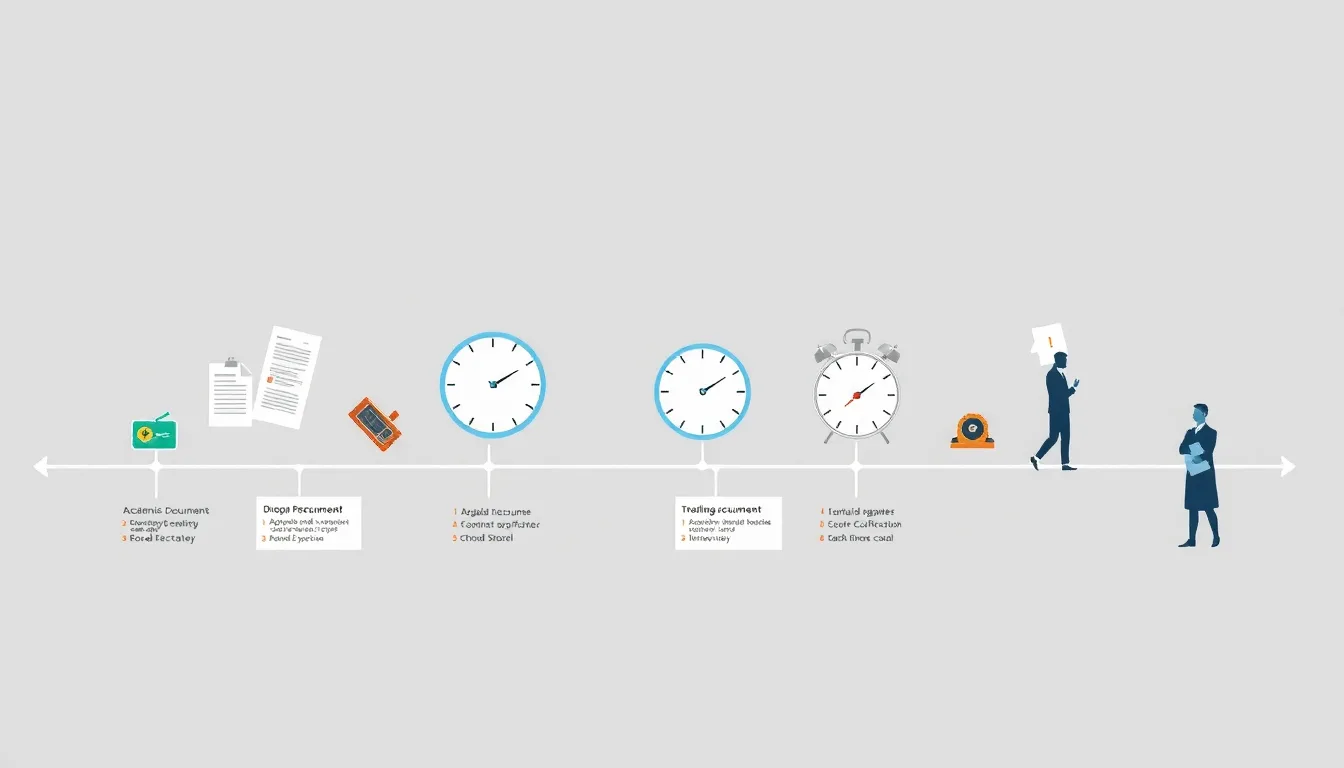
The Oxford MPP application process typically opens in September and closes in January, with decisions released in March. Early preparation is essential. Here is a recommended timeline:
- 6-12 months before deadline: Research the programme thoroughly. Attend webinars, reach out to alumni, and review faculty research. Begin reflecting on your professional and academic experiences, identifying gaps and areas for development.
- 4-6 months before deadline: Identify and approach referees. Give them plenty of time and provide a summary of your achievements and goals. Begin drafting your personal statement and CV.
- 2-3 months before deadline: Refine your personal statement, focusing on evidence, specificity, and programme fit. Seek feedback from trusted mentors or advisors. Address any gaps in your quantitative or analytical skills.
- 1 month before deadline: Finalise all documents. Double-check formatting, word limits, and submission requirements. Submit well before the deadline to avoid last-minute technical issues.
Strategic planning is especially important if you are applying to multiple policy programmes. Each application should be tailored to the specific ethos, curriculum, and selector expectations of the programme in question. Avoid the temptation to recycle content.
Frequently Asked Questions: Oxford Blavatnik MPP Admissions
Q: Do I need a background in public policy or government?
A: No. The MPP cohort includes people from a wide range of backgrounds, including law, business, science, engineering, and the arts. What matters is your ability to demonstrate relevant skills (analytical thinking, leadership, evidence-based decision-making) and a credible motivation for pursuing public policy.
Q: How important is work experience?
A: While there is no formal minimum, most successful applicants have at least 2-3 years of substantive professional experience. Selectors value depth of impact and reflection over years served or employer prestige.
Q: What if my quantitative skills are weak?
A: Address this honestly in your application. Show how you are working to improve (e.g., online courses, relevant projects) and emphasise your willingness to learn. Selectors value self-awareness and initiative.
Q: Can I apply straight from undergraduate study?
A: It is possible, but rare. You will need to provide exceptional evidence of maturity, impact, and readiness for a demanding, practitioner-focused programme.
Q: How competitive is the process?
A: The MPP is highly selective, with a global applicant pool. Focus on the quality and alignment of your application, not just your credentials.
Strategic Next Steps for Oxford Blavatnik MPP Applicants
Applying to the Oxford Blavatnik School of Government is a demanding process that requires more than a collection of impressive documents. Success depends on your ability to tell a coherent, evidence-based story that demonstrates your readiness for the MPP and your potential to contribute to public leadership. Selectors are looking for substance, not spin: applicants who can engage with complexity, reflect on their experiences, and communicate with clarity. If you are unsure whether your profile fits, or if you want to benchmark your application against other G5 options, consider using a structured programme matching tool. At G5Admissions, we help applicants think critically about their strengths, weaknesses, and programme choices-so you can target your efforts where they will have the greatest impact, and avoid the common traps that undermine otherwise strong candidates.
Above all, approach the process with honesty, curiosity, and a commitment to learning. The Oxford MPP is not for everyone, but for those who are ready, it offers an unparalleled opportunity to develop as a policy leader in a truly global community.