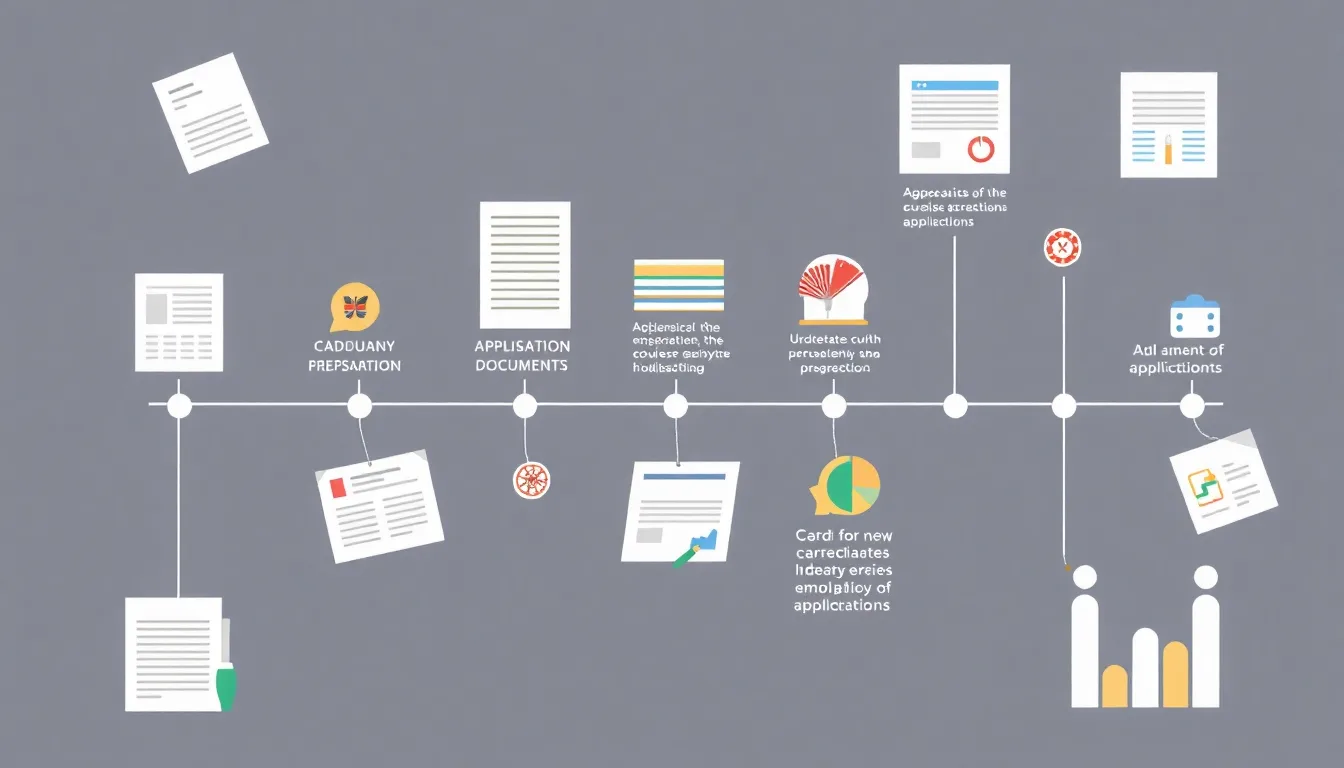
Understanding the LSE Admissions Cycle: What Matters and When
Every year, thousands of applicants target LSE’s flagship master’s programmes such as MSc Finance, MSc Management, and MSc Public Policy. While the official website outlines application windows and minimum requirements, the real challenge is understanding how selectors actually review applications over time-and how your timing, content, and evidence influence their decisions. A strong LSE application is not just about meeting deadlines, but about aligning your profile and materials with the programme’s priorities at each stage of the cycle.
When Do LSE Master’s Applications Open and Close?
LSE typically opens its graduate applications in early October for entry the following autumn. Unlike Oxford or Cambridge, LSE operates a rolling admissions system: programmes remain open until filled. However, this does not mean that applying late is without risk. For high-demand programmes like MSc Finance, places can fill quickly, and waiting lists may form by January or even earlier. Applicants should always check the official programme pages for current status and deadlines, as these can change rapidly for popular courses.
For instance, MSc Finance often receives a surge of competitive applications in the first two months. By February, selectors may have already made most offers or be holding out for only exceptional candidates. MSc Management and MSc Public Policy may remain open longer, but the same competitive dynamic applies: earlier applications are reviewed in a less crowded field, and selectors have more flexibility in shaping the incoming cohort.
Rolling Admissions: Myths and Realities
Many applicants misunderstand what rolling admissions means in practice. Some believe that as long as a programme is open, their chances are unaffected. In reality, LSE selectors begin reviewing applications as soon as they arrive. Early applicants benefit from the widest availability of places and are compared against a less saturated pool. For example, a candidate for MSc Public Policy who applies in October with a strong academic record and clear policy experience may stand out more than an equally strong applicant who applies in March, when selectors are filling the last few spaces and may be seeking specific profiles to balance the cohort.
However, applying early with a weak application is rarely strategic. Selectors do not lower their standards in the opening weeks. A rushed or incomplete application-such as a personal statement that lacks clear motivation or a recommendation letter that simply lists courses taken-will not gain an advantage just because it arrived first. The key is to submit your best possible application as soon as you are genuinely ready, rather than racing to be first.
Key Milestones: What to Prepare, and When
Successful LSE applicants work backwards from their target submission window. For MSc Finance, this often means finalising internship experiences, securing quantitative evidence, and confirming strong references by October or November. MSc Management and MSc Public Policy applicants should also consider how recent professional or extracurricular experiences can be leveraged in their statements and CVs.
Selectors for MSc Finance, for example, scrutinise not just your degree but also the depth of your quantitative coursework and the relevance of your internships or work experience. A weak version of evidence might be a CV that lists a summer internship at a bank with no details. A stronger version would concisely explain the analytical skills gained, the complexity of the tasks handled, and how these relate to the core content of the LSE programme.
MSc Public Policy applicants should ensure that their statement goes beyond generic interest in policy. A weak version might state, “I am passionate about public policy and want to contribute in a specific, evidenced way.” A stronger version would reference a specific policy challenge the applicant has engaged with, explain the skills developed, and link these directly to the LSE curriculum and career outcomes.
How Selectors Prioritise Applications Over Time
Selectors at LSE do not simply process applications in order of arrival. They review each application holistically, but as the cycle progresses, their priorities may shift. Early in the cycle, selectors have more flexibility to assemble a varied cohort. Later, they may seek candidates who fill gaps in class diversity, academic background, or work experience. For MSc Management, for example, if the early cohort is weighted towards students with economics backgrounds, selectors may later look for applicants with more diverse undergraduate degrees or international experiences.
This dynamic means that some applicants can benefit from applying slightly later, if their profile is unusual or brings something missing from the initial pool. However, this is only an advantage if selectors are still actively seeking such profiles and if places remain. For most applicants, the risk of waiting outweighs the potential reward, especially for high-demand programmes.
Programme-Specific Dynamics: Finance, Management, Public Policy
MSc Finance: This is one of LSE’s most competitive programmes, and selectors expect clear quantitative preparation, evidence of analytical ability, and relevant professional experience. Selectors use the early months to identify applicants who can handle the technical rigour of the programme. Applicants with less traditional backgrounds can still be successful, but only if they provide compelling evidence of quantitative skill and motivation.
For example, a mathematics major with a 1st class degree and two summer internships in investment banking will be evaluated differently from a humanities graduate who has completed online finance courses and a consulting internship. The latter must provide direct evidence-such as high quantitative module marks, a reference that comments on analytical ability, or a personal statement that details specific self-driven learning and its outcomes. Selectors look for signals that the applicant can thrive in a cohort where advanced econometrics and financial modelling are core requirements.
MSc Management: Selectors look for academic strength, but also evidence of leadership, teamwork, and international outlook. Applicants who simply list extracurriculars without reflecting on what was learned will not stand out. A stronger application connects past experience to the specific learning environment at LSE and articulates a clear career trajectory.
For instance, a candidate who led a student consulting project for a social enterprise and can quantify the impact (e.g., "increased client outreach by 30% through digital strategy") and reflect on the experience ("developed cross-cultural communication skills by working with an international team") will be more compelling than one who simply lists "consulting club member." Selectors are attentive to how applicants will contribute to group projects and the overall classroom dynamic.
MSc Public Policy: This programme values diversity of experience and a nuanced understanding of policy-making. Selectors are wary of generic statements and look for applicants who can demonstrate critical engagement with policy issues, either through research, internships, or real-world impact.
For example, an applicant who interned with a local government agency and contributed to a report on housing policy, then links this experience to a specific LSE module (e.g., "Policy Appraisal and Evaluation") and future career goals, will stand out. Selectors value applicants who can articulate both the challenges and the complexity of policy work, and who have demonstrated initiative beyond the classroom.
Recommendation Letters and Quantitative Evidence: Timing Matters
Many applicants underestimate the time required to secure strong recommendation letters. For MSc Finance, a last-minute request often results in a generic letter that simply confirms attendance and grades. Selectors are looking for specific examples of quantitative skill, work ethic, and intellectual curiosity. For MSc Public Policy, the best letters contextualise the applicant’s engagement with policy challenges and their suitability for graduate study. Applicants should approach referees early, clearly communicate deadlines, and provide them with context about the programme and what selectors value.
For MSc Management, a reference that describes the applicant’s role in a group project, their leadership style, and ability to adapt to feedback is far more valuable than a letter that simply lists grades. Selectors are attentive to the credibility and specificity of references, and a well-prepared referee can make a significant difference-especially if the applicant’s academic record is borderline or their background is non-traditional for the programme.
Quantitative evidence is especially critical for MSc Finance. This can include detailed transcripts, GRE/GMAT scores (where required), and even supplementary evidence such as certificates from online courses in statistics or programming. Selectors may also consider the reputation of the applicant’s undergraduate institution and the rigour of their coursework. For borderline cases, a strong quantitative reference or evidence of high achievement in relevant modules can tip the balance.
Case Studies: Application Timing and Selector Logic
To illustrate how timing and selector logic intersect, consider the following scenarios:
Case 1: MSc Finance, Early Submission
An applicant submits in October with a strong quantitative background, two relevant internships, and detailed references. Their application is reviewed in a relatively empty pool, and selectors have the flexibility to offer a place without worrying about cohort balance. This applicant is likely to receive a decision within 6-8 weeks, barring any interview requirement.
Case 2: MSc Management, Mid-Cycle Submission
An applicant submits in January. By this point, selectors have already offered places to many applicants with economics or business backgrounds. The applicant, who studied engineering and has international leadership experience, stands out for their diversity. Selectors may prioritize this profile to balance the cohort, even if the academic record is slightly less conventional.
Case 3: MSc Public Policy, Late Submission
An applicant submits in March. The programme is still open, but selectors are now seeking candidates who fill specific gaps-perhaps more international experience or demonstrated policy impact. A generic application at this stage is unlikely to succeed, but a candidate who has just completed a high-impact policy internship and can provide a fresh, detailed reference may still be competitive if selectors are seeking that profile.
After Submission: What Happens Next?
Once submitted, applications are reviewed by selectors for the relevant department. For some programmes, particularly MSc Finance and MSc Management, shortlisted candidates may be invited to interview. These invitations are typically sent on a rolling basis as selectors progress through the pool. Applicants should be prepared for a rapid turnaround and should check their email regularly. The absence of an early decision does not always mean rejection; some strong candidates are held for further comparison as the cycle develops.
Applicants should also monitor the status of their application through the LSE portal and respond promptly to any requests for additional documents. Delays in providing transcripts or test scores can lead to missed opportunities, especially when places are limited. For MSc Finance, in particular, failure to provide quantitative evidence or to clarify a gap in the academic record can result in a swift rejection, as selectors have many strong candidates to choose from.
For MSc Public Policy, selectors may request further details about recent experience or clarification of a policy project. Prompt, detailed responses can contribute in a specific, evidenced way, especially late in the cycle when decisions are made quickly.
Strategic Positioning and Next Steps
LSE admissions is an ongoing, dynamic process rather than a single deadline-driven event. Applicants who succeed understand both the timeline and the logic behind selector decisions. This means positioning your profile effectively, matching your evidence to the specific demands of your chosen programme, and preparing all materials-including statements, references, and quantitative evidence-well in advance of your target submission window.
Applicants who want to maximise their chances should treat the timeline not just as a series of dates, but as a framework for building a coherent, compelling case. Modules such as applicant positioning, programme matching, writing strategy, recommendation strategy, interview preparation, and application review can all play a role in ensuring that your application is both timely and targeted to what LSE selectors actually want.
Finally, remember that LSE’s rolling admissions system rewards both readiness and relevance. The most successful applicants are those who anticipate selector priorities, provide clear and credible evidence, and submit their strongest possible case at the optimal moment-not simply the earliest or latest. By understanding the nuances of the admissions timeline and the logic of selector decision-making, you can position yourself for success in one of the world’s most competitive graduate admissions environments.